Joint Biennial Meeting of WCC Commissions and Reference Groups commences in Chiang Mai
Programme Review and Programme Direction

Two key deliberative sessions during the 15th CCA General Assembly are the Programme Review and Programme Direction sessions.

The Programme Review and Programme Direction sessions will both be conducted in three groups relating to the CCA’s programme areas, namely, (i) General Secretariat (GS), (ii) Mission in Unity and Contextual Theology (MU) and Ecumenical Leadership Formation and Spirituality (EF); and (iii) Building Peace and Moving Beyond Conflicts (BP) and Prophetic Diakonia (PD).

Assembly participants will have the option to join one of three groups for both the Programme Review and Programme Direction sessions. For the sake of coherence, the assigned group will remain the same for both sessions.

General Secretariat

The General Secretariat oversees the coordination of programmatic, administrative, and financial activities of the organization. The GS comprises various departments such as church and ecumenical relations, relations with ecumenical partners, finance, administration, and communications, which provide crucial support and services for the implementation of programs and contribute to the overall functioning of the CCA.

Programmes: Relations with member churches and councils, ecumenical partners; advocacy at the United Nations; ecumenical responses to emerging issues in solidarity; income development and finance; and communications.

Mission in Unity and Contextual Theology (MU) and Ecumenical Leadership Formation and Spirituality (EF)

Under the MU programme area, the CCA accompanies Asian churches to strengthen their mission and witness in multi-religious contexts, revitalise and nurture church unity and the Asian ecumenical movement, and develop contextual theological foundations.

Programmes: Asian Movement for Christian Unity (AMCU); Congress of Asian Theologians (CATS); Asian women doing theology in the context of wider ecumenism; contextualisation of theology in Asia and ecumenical theological education.

The EF programme area focuses on nurturing and developing ecumenical leaders in Asia. The programme aims to enhance spiritual formation and theological understanding, enabling people to actively engage in ecumenical dialogue and collaboration.

Programmes: Ecumenical Enablers’ Training in Asia (EETA); Asian Ecumenical Institute (AEI); Youth and Women Leadership Development; Ecumenical Spirituality and Nurturing of Contextual Liturgical Traditions; Asia Sunday

Building Peace and Moving Beyond Conflicts (BP) and Prophetic Diakonia and Advocacy (PD)

The BP programme area is dedicated to promoting peace, justice, and reconciliation in Asia’s diverse contexts. Through training, advocacy, and dialogue, the programme addresses the root causes of conflicts, empowers communities, and fosters sustainable peacebuilding initiatives.

Programmes: Pastoral Solidarity Visits; Churches in Action for Moving Beyond Conflict and Resolution; Young Ambassadors of Peace in Asia (YAPA); Ecumenical Women’s Action Against Violence (EWAAV); Eco-Justice for Sustainable Peace in the Oikos.

The PD programme area focuses on promoting justice, human rights, and social transformation in Asia. Through advocacy, capacity-building, and raising awareness, the programme addresses systemic injustice, empowers marginalised communities, and advocates for prophetic actions and meaningful change.

Programmes: Human Rights advocacy; Migration, Statelessness, and Trafficking in Persons; Asian Ecumenical Disability Advocacy Network; Asian Advocacy Network on the Dignity and Rights of Children (AANDRoC); Ecumenical Solidarity Accompaniment and Diakonia in Asia (ESADA); Health and Healing; Good Governance; Action Together to Combat HIV and AIDS in Asia (ATCHAA).

No preference updated.

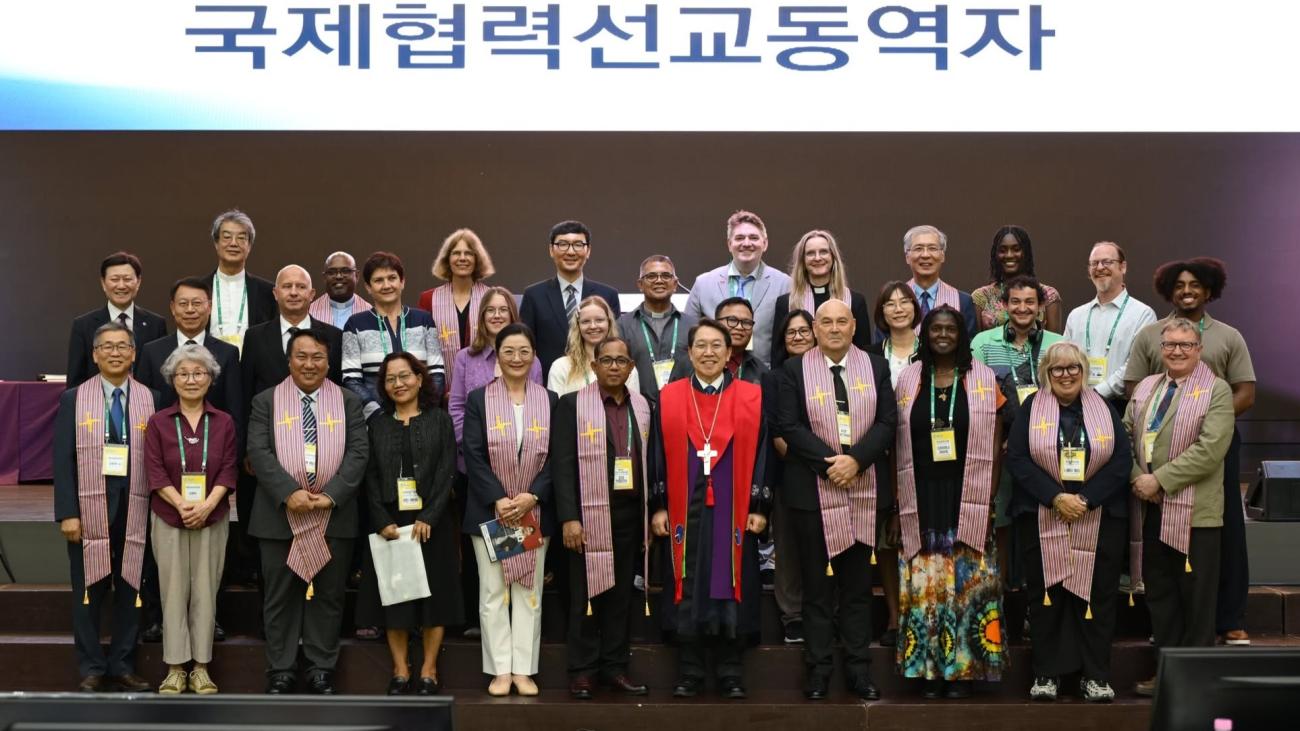
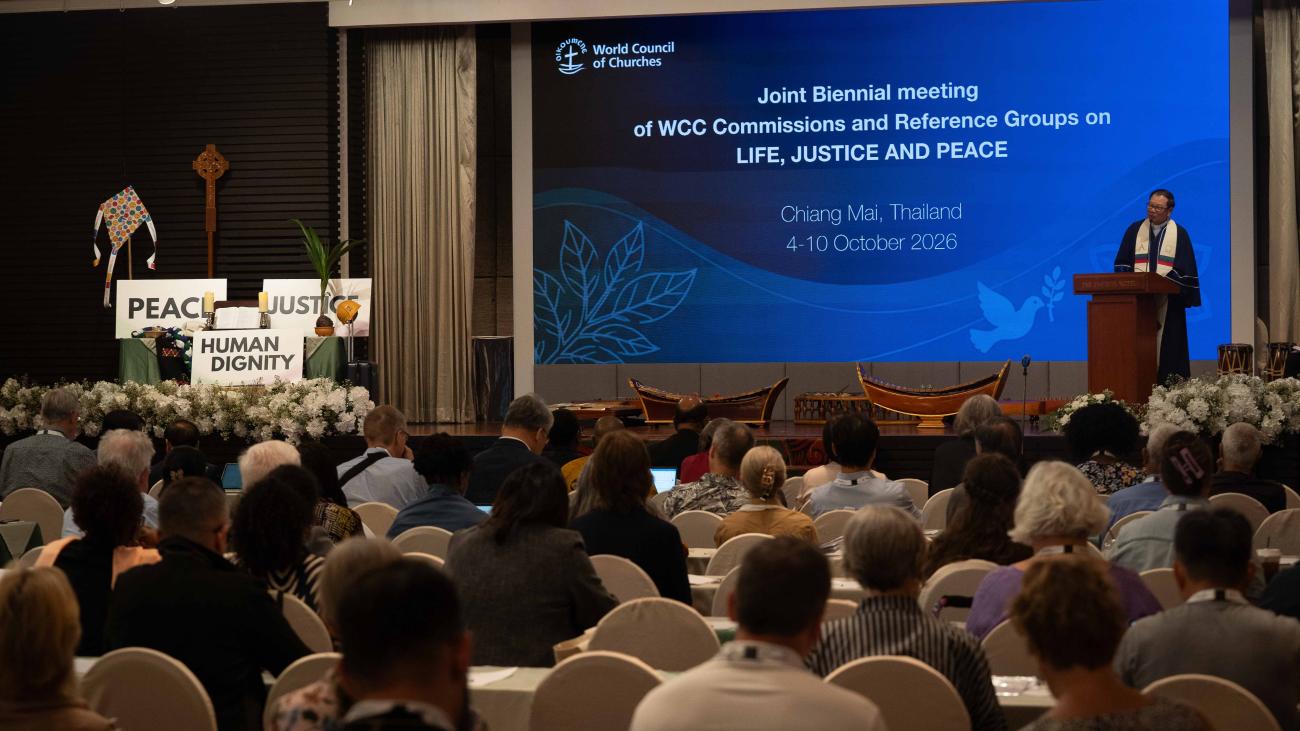
    Opening prayer of the Joint Biennial Meeting of WCC Commissions and Reference Groups. Photo: Sean Hawkey/WCC

    Chiang Mai, Thailand: The Joint Biennial Meeting of the World Council of Churches (WCC) Commissions and Reference Groups on Life, Justice and Peace commenced on 5 October 2026 at the Empress Hotel in Chiang Mai, Thailand.

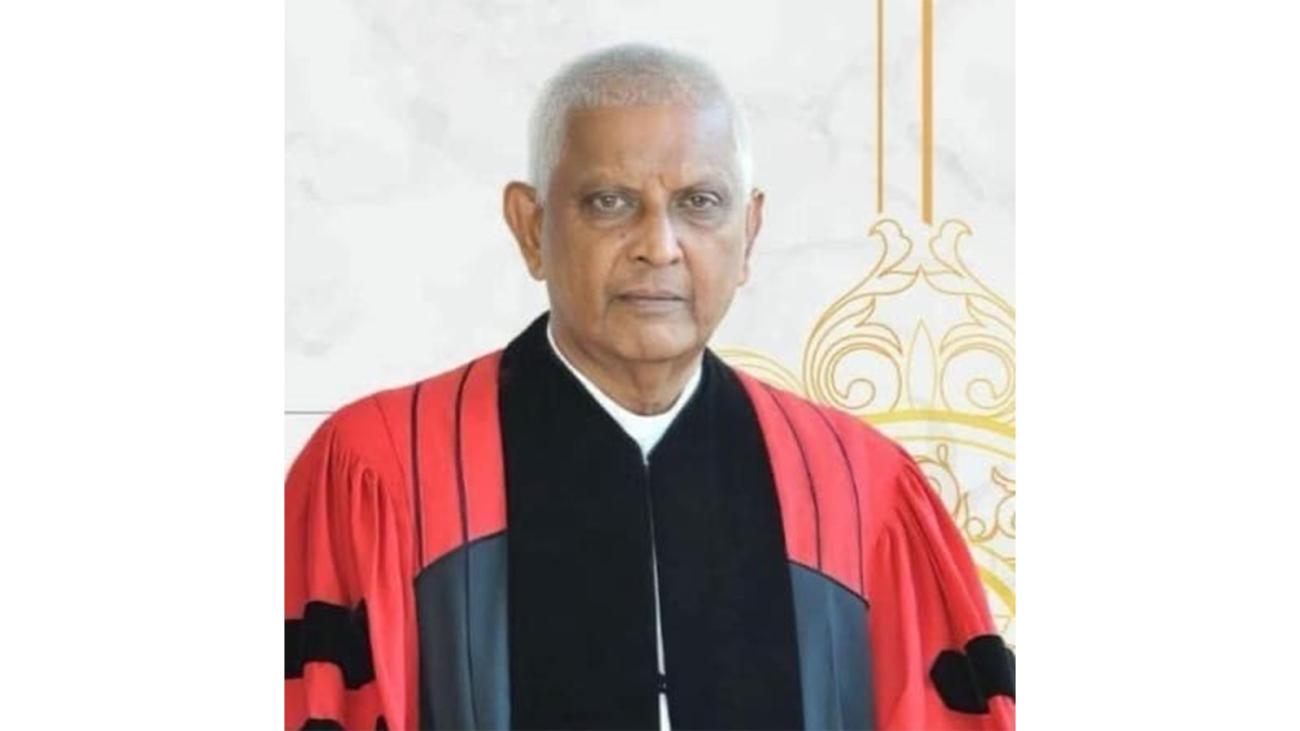
    Following a worship service that incorporated traditional Thai music and dance, WCC General Secretary Rev. Prof. Dr Jerry Pillay opened the meeting with a theological reflection on the nature and mission of the Church, posing a fundamental question: "What does it mean to be Church today?"

    Reflecting on the Church's witness in a world marked by conflict, inequality, polarisation, and ecological crisis, he called on churches to walk and witness together for the life of the world.

    Rev. Dr Pillay emphasised that the challenge for the 21st century Church is to move from being Church as an institution that exists in the world to being Church as a communion that exists for the life of the world. The Church must become what it proclaims: embodying the reconciliation it announces, practising the justice it advocates, and living the unity for which it prays.

    "The Church must listen to those whom the world ignores and walk with those who suffer. And it must witness, in word and deed, to the love of Christ that moves the world toward reconciliation and unity. Being Church today means walking together in Christ, for the healing of the world", stressed the WCC General Secretary.

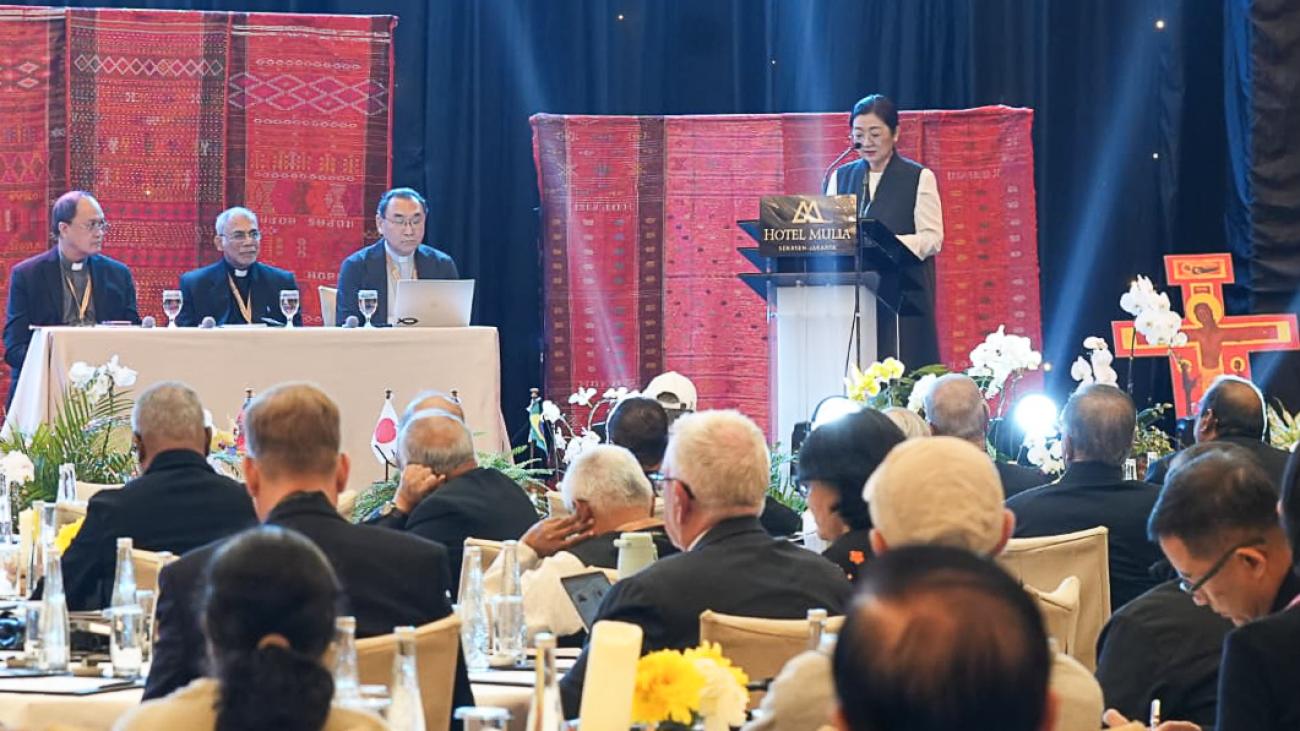
    Christian Conference of Asia (CCA) General Secretary Rev. Jung Eun Grace Moon, delivering greetings at the opening session of the joint meeting, shared the context of the region in which they were meeting: one marked by spiritual richness, cultural diversity, and resilience, yet also by persistent challenges of inequality, displacement, violence, discrimination, and climate change.

    “In these times, our ecumenical movement is called to embody hope. Our Christian faith means we cannot ignore suffering or injustice; we are called to stand with those who are hurting, excluded, or silenced,” said Rev. Moon.

    Stressing the need for a concerted effort to address the interconnected challenges facing the world today, Rev. Moon noted that "our calling goes beyond charity to working together for justice, healing, and the well-being of all people and creation."

    Rev. Moon also participated in a panel on “Repentance and Renewal – Recovering the Credibility of the Church’s Public Witness,” alongside Rudelmar Bueno de Faria, General Secretary of ACT Alliance; Rev. Philip Vinod Peacock, General Secretary of the World Communion of Reformed Churches; and Dr Stephen Brown of the WCC. The panel examined the challenges and gaps in the Church’s witness and explored how it could be strengthened moving forward.

    The WCC’s Commission of the Churches on International Affairs (CCIA), Commission on Climate Justice and Sustainable Development (CCJSD), Commission of the Churches on Health and Healing (CCHH), Joint Community of Women and Men Reference Group (JCWM), Ecumenical Diakonia Reference Group (EDRG), and Overcoming Racism, Xenophobia, Casteism and all forms of Discrimination Reference Group (ORXCD) are meeting in Chiang Mai from 4 to 10 October 2026.

    Chiang Mai conference opens to explore “Being Church in the World Today” (WCC News Release)
    Photos from the first day of the WCC Joint Commissions and Reference Groups Meeting can be found here.