CCA General Secretary affirms Asian churches’ solidarity for peace on the Korean Peninsula at the 2026 International Ecumenical Peace Convocation

Picture credit: NCCK
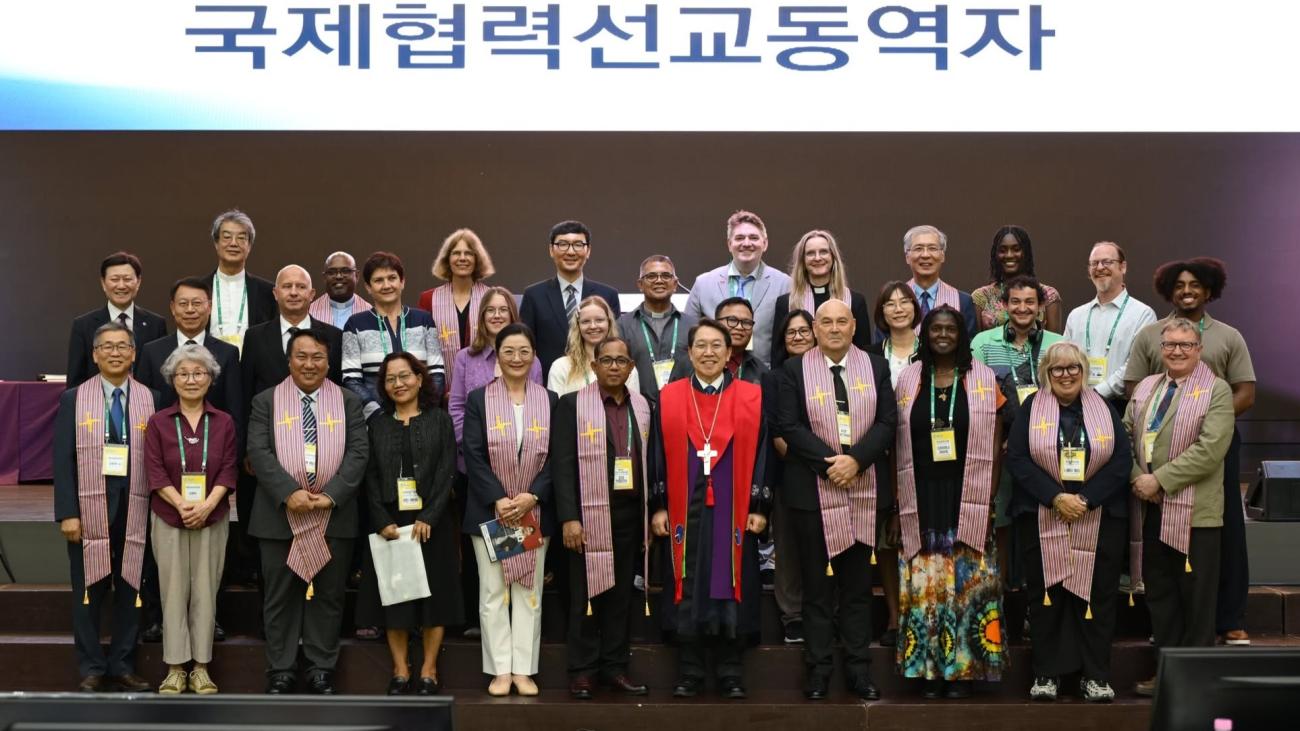
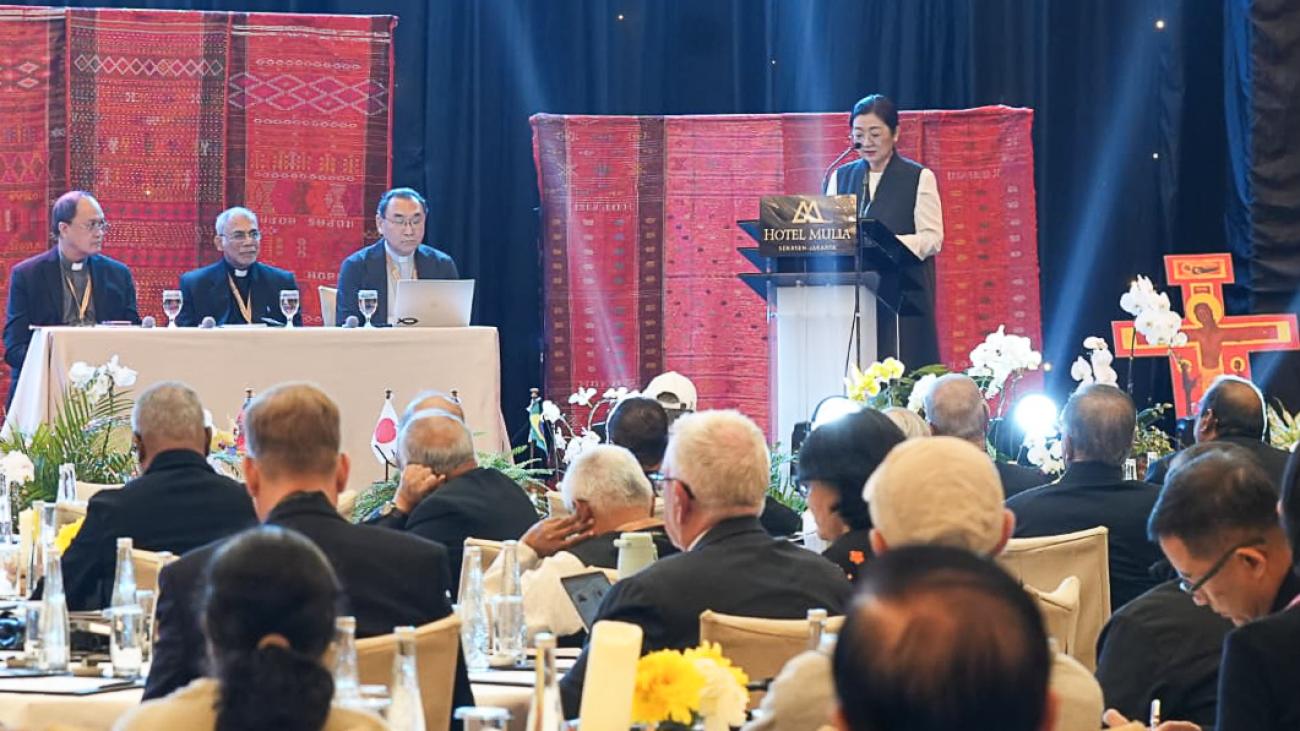
Seoul, Republic of Korea: The General Secretary of the Christian Conference of Asia (CCA), Rev. Jung Eun Grace Moon, affirmed the solidarity of Asian churches with the Korean people and all who strive for peace, reconciliation, and healing as she delivered greetings at the opening of the 2026 International Ecumenical Peace Convocation.
Jointly convened by the World Council of Churches (WCC), the Christian Conference of Asia (CCA), and the National Council of Churches in Korea (NCCK), the International Ecumenical Peace Convocation is being held from 9 to 13 September under the theme, “World Peace and the Korean Peninsula: The Church as a Community of Healing, Reconciliation and Peacebuilding.”
Speaking at the Seoul Anglican Cathedral on 9 September, Rev. Moon emphasised the urgency of renewing the global commitment to peace at a time of escalating conflicts, militarisation, forced displacement, economic insecurity, ecological destruction, and the persistent threat of nuclear weapons.
“In too many places, political ambition is valued above human dignity, weapons are falsely seen as protectors of security, and fear is allowed to shape relations between nations and communities,” she said.
Against this backdrop, Rev. Moon said that the Christian faith calls the Church to speak “another language”—the language of reconciliation, compassion, justice, and hope.
“The Gospel does not permit the Church to remain silent in the face of suffering, division, and the destruction of life. Jesus calls blessed the peacemakers, and in Christ we are called to become a community that breaks down walls of hostility and builds pathways toward peace,” she stated.
The CCA General Secretary described the Korean Peninsula’s continuing division as a profound human, moral, and spiritual tragedy. More than seven decades after the Korean War, separated families, military confrontation, and the shadow of nuclear danger remain enduring realities.
“We declare unequivocally that the Korean Peninsula must never be reduced to a stage for geopolitical rivalry or the interests of powerful nations. The people of Korea deserve a future where children live free from the threat of war, families are reunited, and human connection triumphs over suspicion and hostility,” she said.
The Convocation has brought together prominent church and ecumenical leaders, peace advocates, human-rights defenders, civil society representatives, and communities affected by conflict from around the world. Through theological reflection, dialogue on disarmament and denuclearisation, and discussions on peacebuilding in Northeast Asia, participants are exploring ways of strengthening the churches’ witness and commitment to Just Peace.
The gathering marks the 40th anniversary of the historic Glion Consultation of 1986 and draws inspiration from the World Council of Churches’ International Ecumenical Peace Convocation held in Kingston, Jamaica, in 2011, renewing the ecumenical movement’s shared commitment to peacebuilding in today’s rapidly changing world.
In conjunction with the Convocation, Rev. Moon also had the opportunity to engage with public officials of the Republic of Korea. On 11 September, the General Secretaries of the World Council of Churches (WCC), the Christian Conference of Asia (CCA), and the National Council of Churches in Korea (NCCK) paid a visit to Prime Minister Han Sung-sook. During the meeting, they shared key reflections emerging from the International Ecumenical Peace Convocation, particularly the churches’ commitment to peace, reconciliation, and dialogue on the Korean Peninsula. Prime Minister Han expressed the Korean Government’s hope that religious communities and ecumenical partners would play a more active role in helping to reopen the currently stalled channels of communication between the two Koreas through dialogue, mediation, and people-to-people engagement.